What Is Portfolio Management Software?

Portfolio management software is a digital tool that helps organisations plan, prioritise, and monitor their collection of projects and programmes. It provides a centralised view of investment decisions, resource allocation, project status, and strategic alignment, enabling portfolio managers and executives to make data-driven decisions about which work to fund, accelerate, defer, or stop.

Portfolio management software definition

Portfolio management software is a category of business application that centralises the governance of an organisation’s project and programme investments. It sits above individual project management tools, aggregating data from across the portfolio to give leaders a consolidated view of where money is being spent, what is being delivered, and whether it is generating the expected value.

It is sometimes referred to as PPM software (Project Portfolio Management software) or a portfolio management platform. The terms are used interchangeably across the market.

What does portfolio management software do?

The core functions of portfolio management software are:

  • Project intake and evaluation: capturing requests for new projects, scoring them against defined criteria, and making funding decisions.
  • Prioritisation and ranking: scoring and ranking all candidate and active projects to reflect the organisation’s strategic priorities and resource constraints.
  • Resource and capacity management: tracking available capacity across teams and modelling the impact of portfolio decisions on resource demand.
  • Portfolio status reporting: aggregating project status data into a consolidated portfolio view for executive and governance reporting.
  • Benefits realisation tracking: monitoring whether delivered projects are generating the expected outcomes.
  • Scenario planning and what-if analysis: modelling alternative portfolio compositions to support decision-making under uncertainty.
  • Strategic alignment: linking every project to a strategic objective so leaders can see how investment is distributed across priorities.

Key features of portfolio management software

Feature

What it does

Why it matters

Portfolio dashboard
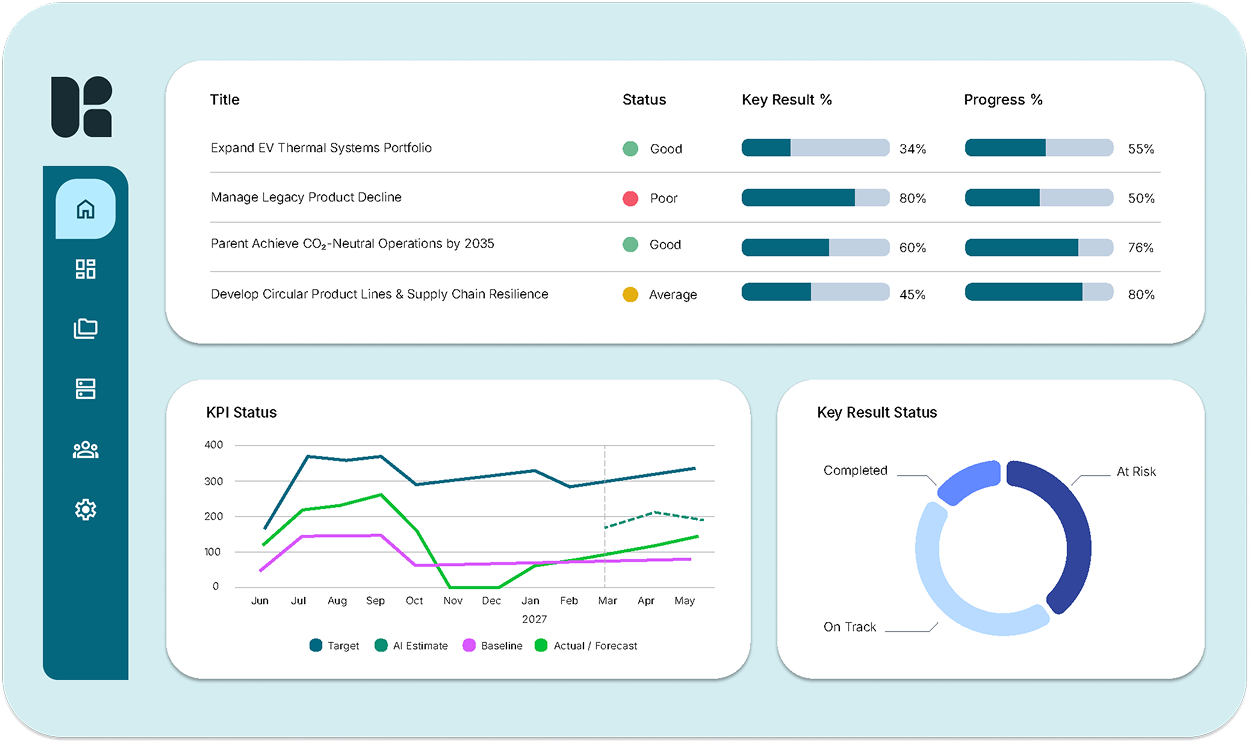
Single view of all projects, statuses, and risks
Replaces manual reporting and gives leaders current information
Prioritisation engine
Scores and ranks projects against defined criteria
Makes investment decisions objective and auditable
Resource capacity planner
Models demand vs supply across teams and roles
Prevents overcommitment before it causes delivery failure
Benefits tracker
Tracks planned vs realised benefits per project
Closes the loop between investment and outcome
Scenario modelling
Models alternative portfolios under different constraints
Supports proactive decision-making when conditions change
Strategic alignment view
Maps projects to objectives to show investment distributio
Ensures the portfolio is pointed in the right direction
Governance workflows
Manages approvals, stage gates, and review cadences
Builds accountability into the portfolio process

Who uses Portfolio management software?

PMO and portfolio managers

The primary users. They use the software daily to manage intake, maintain the portfolio view, track benefits, and produce reporting for governance forums and executive leadership.

Executive leadership

Consumers of portfolio dashboards and investment performance reporting. They use the tool to make strategic funding decisions and to review the overall health of the organisation’s project investments.

Project sponsors and business leads

Use the software to track the status and benefits of the projects they are sponsoring, and to understand how their initiatives compare with others in the portfolio.

Resource managers

Use capacity planning features to manage team allocation, flag overcommitment, and negotiate resourcing across competing project demands.

Portfolio management software vs project management software

Dimension

Portfolio Management Software

Project Management Software

Level
Portfolio and programme
Individual project
Users
PMO, executives, portfolio managers
Project managers, team members
Focus
Investment decisions and strategic alignment
Delivery planning and task management
View
Across all projects simultaneously
Within a single project
Key output
Portfolio dashboard, investment report
Project plan, task board, Gantt chart
Examples
Keto Software, Planview, Clarity
Jira, Microsoft Project, Asana

FAQ

What is the difference between an impact vs effort matrix and a priority matrix?

Frequently asked questions

  1. What is portfolio management software used for?

Portfolio management software is used to centralise the governance of an organisation’s project investments. Core uses include project intake and scoring, portfolio prioritisation, resource capacity planning, strategic alignment tracking, benefits realisation monitoring, and executive portfolio reporting.

  1. What is the difference between portfolio management and project management software?

Project management software supports the delivery of individual projects through task management, planning, and team collaboration. Portfolio management software sits above this, aggregating data from across all projects to support investment decisions, prioritisation, and strategic reporting at organisational level.

  1. What are the key features of portfolio management software?

The most important features are: a portfolio prioritisation engine, resource and capacity planning, real-time portfolio dashboards, benefits realisation tracking, scenario planning and what-if analysis, strategic alignment mapping, and governance workflows for approvals and stage gates.

  1. What is the best portfolio management software for enterprise?

The right choice depends on the complexity of the portfolio, the organisation’s governance maturity, and the primary use case. Key vendors in the enterprise space include Keto Software, Planview, Clarity (Broadcom), and Microsoft Project Online. Evaluation should focus on prioritisation capability, resource planning, reporting flexibility, and total cost of ownership.

When should you use an impact vs effort matrix?

Use it when you have more initiatives than capacity and need a defensible, visual way to prioritise them. It is particularly useful at the start of a planning cycle, after a major strategy shift, or when stakeholders are debating which projects to fund. 

How do you score impact and effort objectively?

Define your scoring criteria before you score. Agree what constitutes a 10/10 impact and a 5/5 effort for your organisation. Use a cross-functional team to score independently, then discuss and align. This reduces individual bias and builds stakeholder buy-in. 

Can impact vs effort matrices be used for portfolio-level decisions?

Yes, it is one of the most common portfolio prioritisation tools. At portfolio level, ‘effort’ typically includes total investment cost, resource demand, and time to value, while ‘impact’ reflects strategic contribution, financial return, and risk profile.

Ready to run strategy the way it deserves to be run?

Keto AI+ is a strategic operating system that goes beyond what project management tools can do. Click below to find out more.