The AI adoption honeymoon is over. It’s time to deliver on value

Capital rationing in project management is the process of allocating a limited investment budget across competing projects. When an organisation cannot fund every viable project, it uses capital rationing to select the combination that maximises strategic value or financial return within its available constraints. There are two types: hard rationing (externally imposed limits) and soft rationing (internally set limits).
The most common failure mode in project portfolios is not scope creep or missed deadlines — it is projects that are delivered on time and on budget yet never deliver the business value they promised. Benefits realisation management exists to close that gap. It shifts accountability from delivery to value, and extends the governance of a project beyond go-live into the period when benefits should actually be appearing.
BRM is the structured approach to ensuring that the benefits defined in a project’s business case are: identified and agreed before the project starts; tracked throughout delivery; measured after completion; and sustained in operations. It sits at the intersection of project governance, performance management, and strategic planning.
The term is used interchangeably with ‘benefits management’ and ‘benefits realisation’. In the UK public sector and in PRINCE2 and MSP frameworks, benefits realisation management is a formal governance requirement. In the private sector, it is increasingly recognised as essential to demonstrating investment value.
At business case stage, define every intended outcome of the project — financial and non-financial. Each benefit should be named, described, and linked to a strategic objective. Benefits that cannot be defined cannot be measured.
For each benefit, create a benefits profile: the baseline measure (where are we now?), the target (where do we need to be?), the measurement method, the benefit owner, and the planned review dates. Consolidate these into a benefits realisation plan.
Monitor whether the project is on track to enable benefit delivery. This includes tracking the delivery of benefit enablers — the capabilities, processes, or behaviours that need to be in place for the benefit to materialise.
At agreed review points after go-live, measure actual performance against the baseline and target. Report on realised benefits alongside project status in the portfolio review.
systems, or behaviours that are the responsibility of operational teams, not the project team.
A benefits realisation plan is the core document of BRM. For each benefit, it should include:
Benefits are defined too vaguely
‘Improved efficiency’ is not a measurable benefit. ‘Reduce average processing time from 4 hours to 2 hours by Q3’ is. Challenge benefit definitions at business case stage and require a baseline, a target, and a measurement method for every benefit before approval.
No one owns the benefit after go-live
Project teams dissolve. Without a named benefit owner who remains accountable after the project closes, benefits measurement stops. Assign benefit owners before the project starts and confirm their commitment in writing.
Benefits are claimed before they are delivered
Some organisations count benefits at project completion rather than when they are actually realised. Implement a post-delivery review cadence at 3, 6, and 12 months, and only report benefits as realised when measurement confirms it.
A benefits realisation plan is a document that defines every intended benefit of a project, how each will be measured, who is responsible for delivering it, and when it will be reviewed. It is created at business case stage and maintained throughout the project and post-delivery period.
The PMO or portfolio office owns the BRM framework and reporting process. Individual benefits are owned by named benefit owners, business leaders in the areas where benefits will materialise. The project sponsor is ultimately accountable for the overall business case.
Project management focuses on delivering outputs (the solution, system, or capability) on time, within budget, and to scope. Benefits realisation management focuses on whether those outputs actually generate the intended business outcomes. BRM extends beyond the project boundary into operations, whereas project management typically ends at go-live or handover.
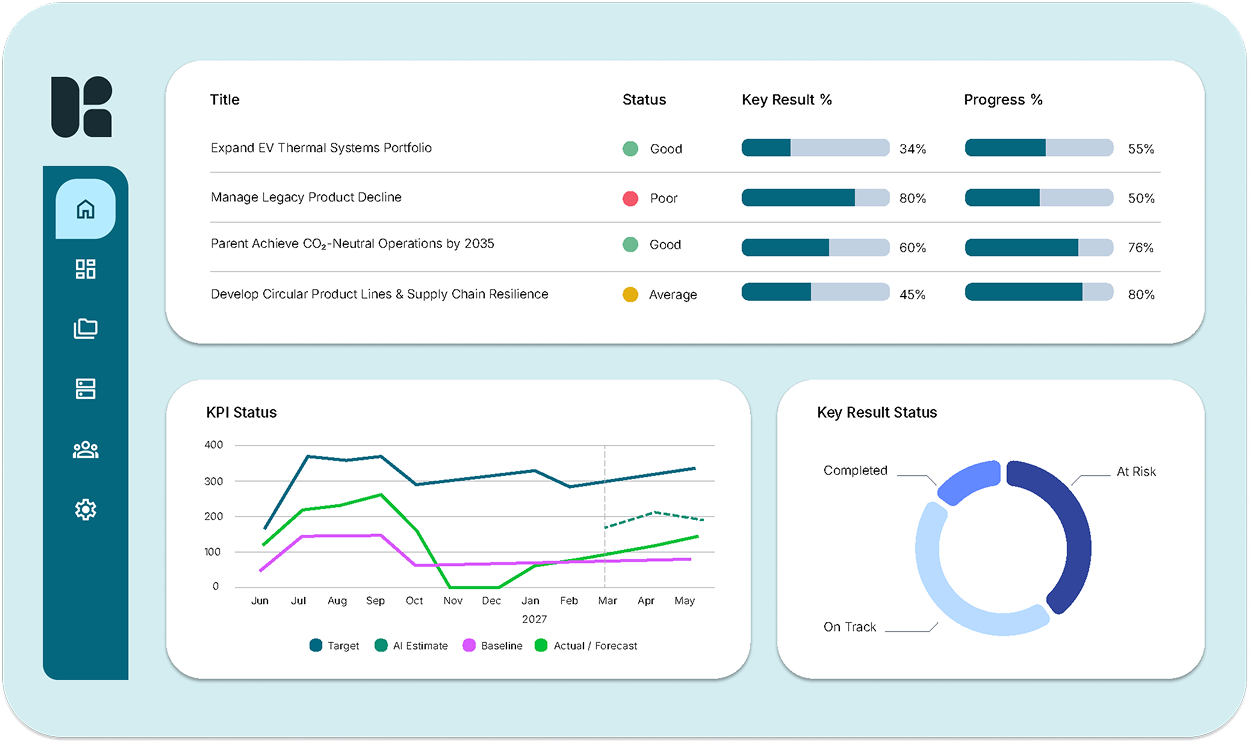
Portfolio management software is the most effective tool for tracking benefits realisation at scale. This includes centralising benefit profiles, assigning owners, setting review milestones, and reporting realised vs planned benefits across the full portfolio. At project level, a benefits register (spreadsheet or similar) is the minimum viable tool.
Get a personalised walkthrough of Keto AI+, and a business case built around your organisation’s scope, scale, and ambitions.