

Why strategy fails (and what to do about it)

Even with the best intentions, many strategies stall before they scale. Not because the ideas lack ambition. But because the system meant to deliver them isn’t designed for change.
In a world that shifts quickly, the old strategic models, annual cycles, static budgets, long-lead planning; can no longer keep up. Momentum fades, not from lack of effort, but from misalignment. Priorities change. Decisions lag. Teams push forward, but not always in the same direction.
So, why does strategy fail? Not for lack of planning. But because delivery systems don’t adapt in time.
The invisible gap: from strategy to execution
Most organisations don’t suffer from a strategy problem. They suffer from a gap between strategy and execution.
Goals are set, but not shared.
Resources are allocated, but not re-evaluated.
Plans are made, but quickly outdated.
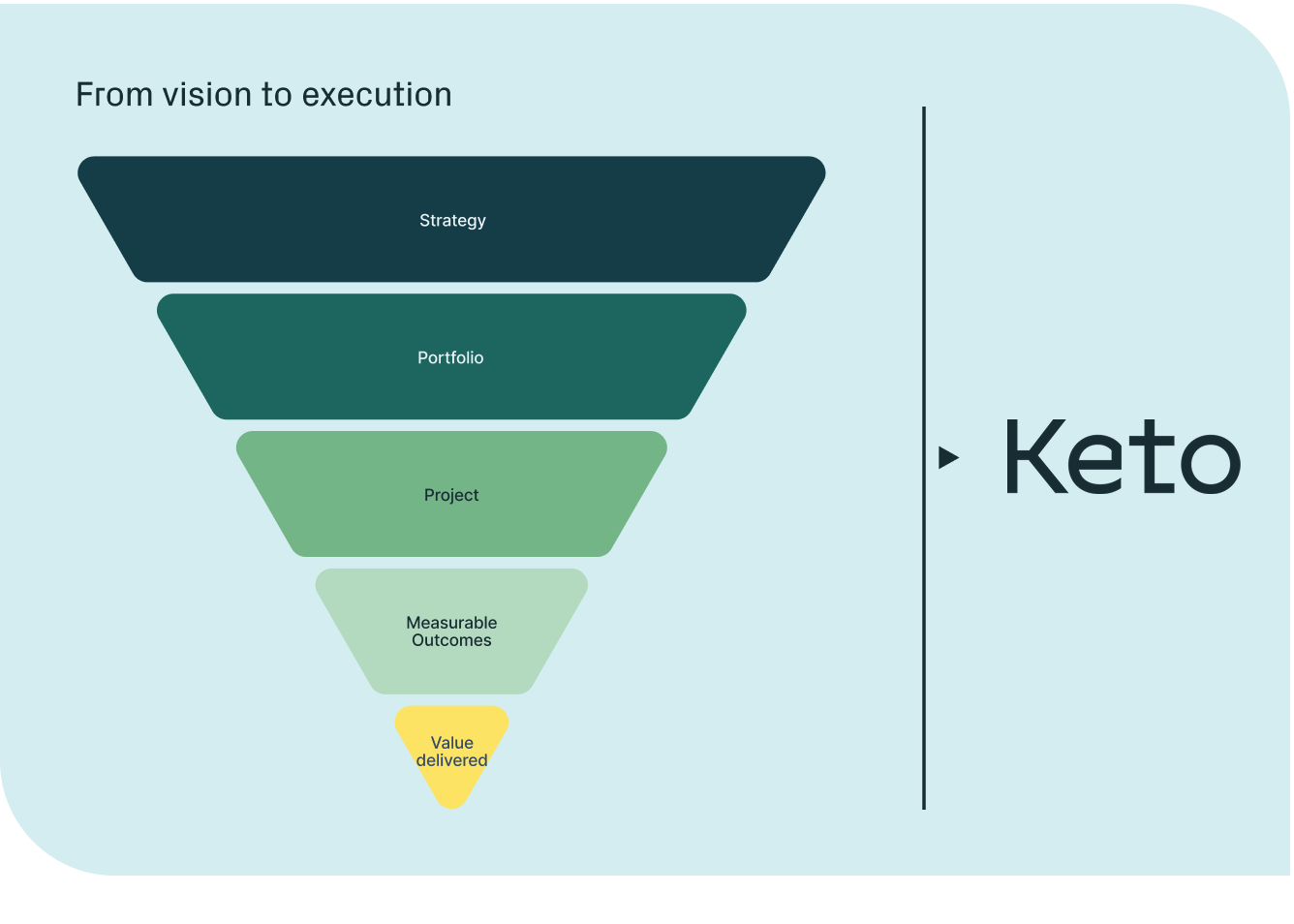
This gap doesn’t always create chaos. Often, it shows up more quietly:
- Projects deliver, but outcomes remain unclear
- Capacity is spent, but progress feels stagnant
- Investments are made, but priorities feel misplaced
Over time, these small disconnects become systemic. Confidence erodes. And strategy begins to feel like a presentation deck, not a shared direction.
Why traditional portfolio management falls short
Many teams still rely on project portfolio management (PPM) to organise and track delivery. PPM is great at keeping work on time and on budget.
But it can’t answer the bigger question:
Are we doing the right work?
Strategic Portfolio Management (SPM) closes this gap. It doesn’t just manage delivery. It steers it.
Where PPM focuses on outputs, SPM centres on outcomes. It connects every project to a purpose. And when conditions shift, it allows strategy to shift too, without starting from scratch.
What SPM makes possible
Organisations using SPM don’t just plan. They adapt. In practice, that looks like:
- Funding initiatives in stages, not all at once
- Prioritising based on value, risk, and urgency
- Linking real-time data to strategic goals
- Shifting resources proactively, not reactively
This creates a living system for strategy. A rhythm of:
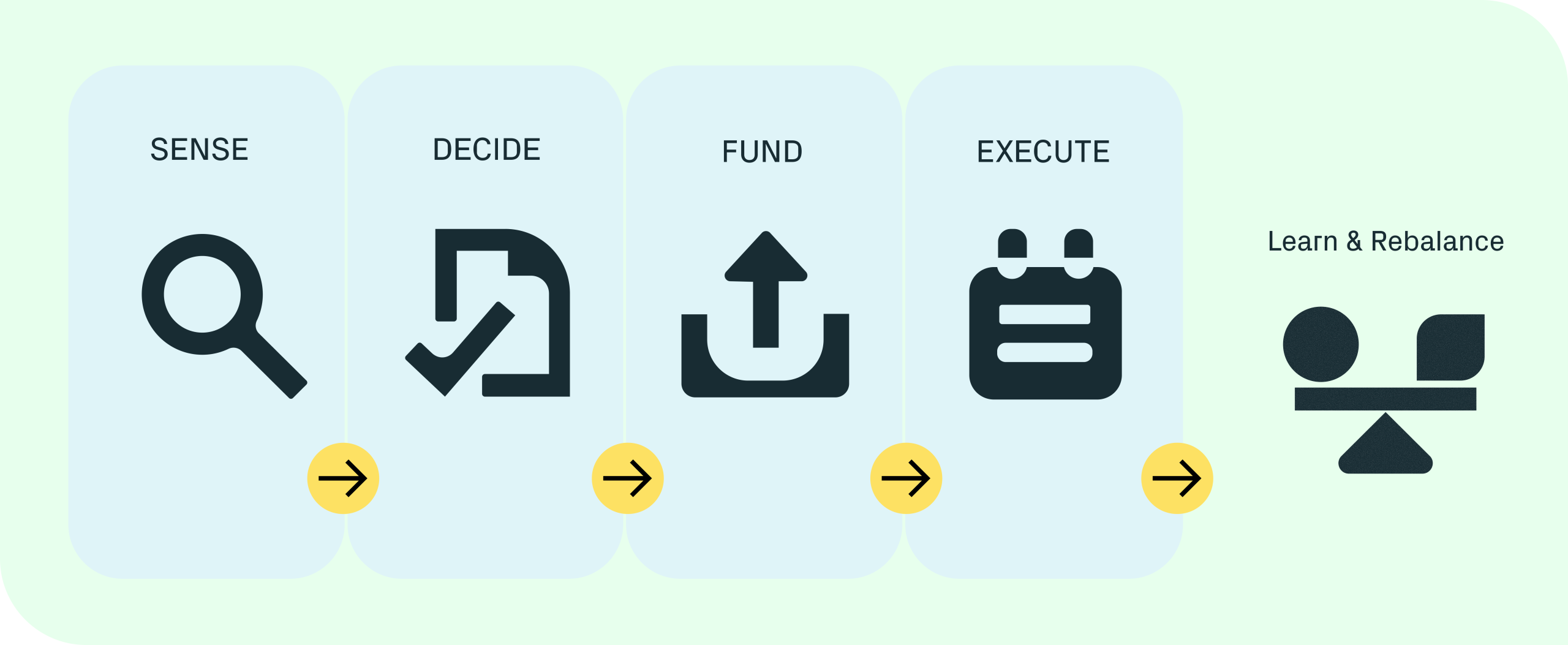
No more waiting for quarterly reviews. No more guessing what to pause or accelerate. Just continuous alignment.
How to spot a failing strategy
You might not see failure at first. But look closely, and you’ll notice the signs:
- Teams are working hard, but struggling to describe why
- Budget is spent, but outcomes feel disconnected
- Strategic goals exist, but no one can trace progress back to them
It’s not a leadership flaw. It’s a system flaw.
SPM doesn’t fix everything. But it gives strategy a stronger foundation.
A steady base to move from
If your organisation is asking:
- Are we funding what matters?
- Can we shift quickly, without confusion?
- Are teams clear on the outcomes that count?
…then it might be time to explore SPM.
Keto was built for this shift. To help teams make sense of complexity. To give leaders visibility, without micromanagement. And to turn ambition into action.
Curious how it could look for you?
See how it turns strategy into a system of motion.