

SPM migration: moving beyond Legacy Systems
Why organisations are rethinking their tools
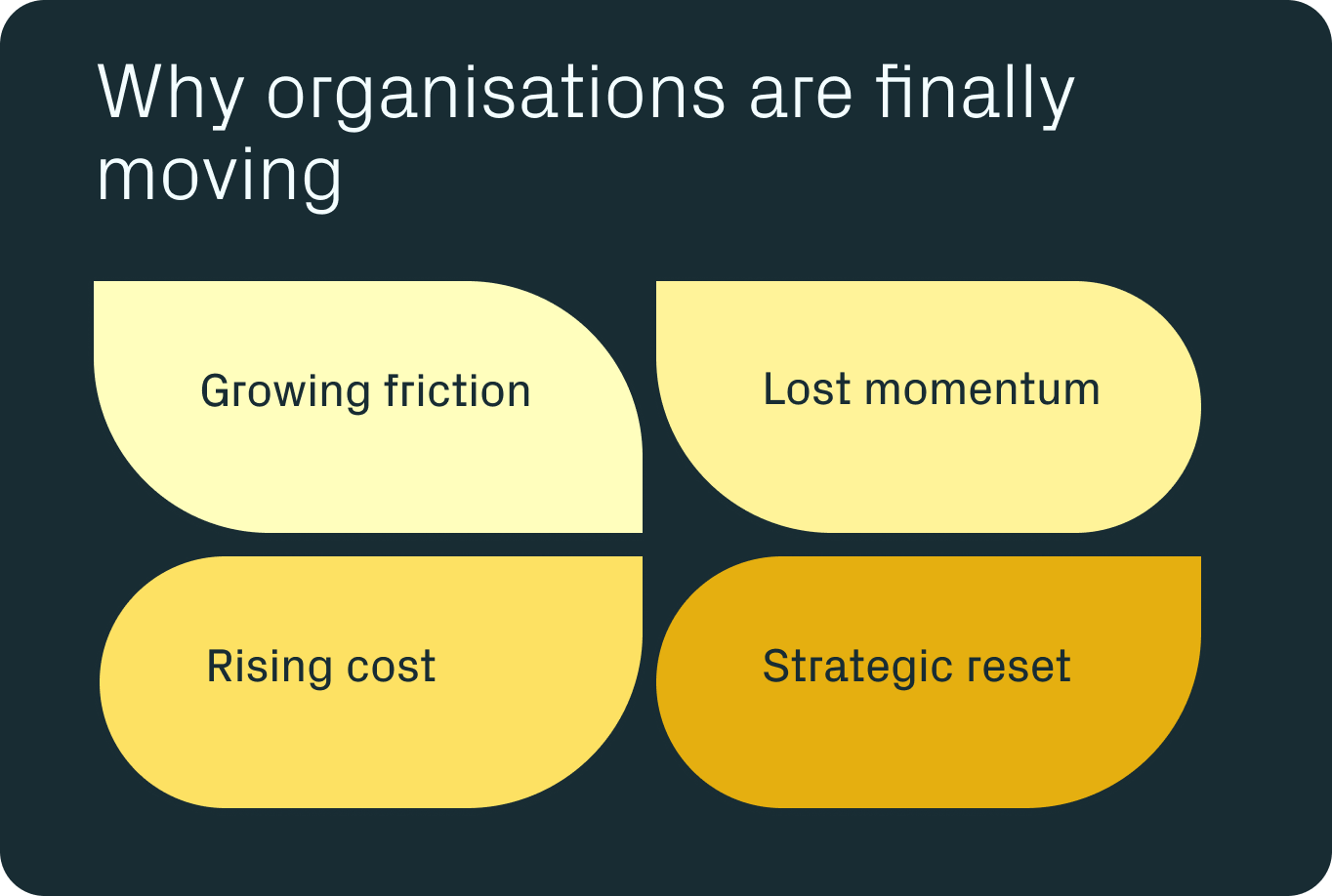
No team sets out to migrate tools for fun. The shift usually begins with frustration: slow processes, unreliable data, rising costs, or simply the sense that the system no longer reflects how people actually work. Stuck in “don’t-touch-it” platforms.
Whether you arrived here from our comparison pages, tool-specific alternatives, or directly through our Resources section, this guide is your starting point.
This is your migration hub, where we unpack the real reasons organisations move on from legacy platforms and share grounded advice for making that shift feel less like a risk and more like a reset.
1. Familiar, but frozen: Locked-in customisations
Legacy tools were heavily customised to match how things worked 5–10 years ago. Now, those same customisations are the biggest blockers to change.
The consequences:
- Even small changes require external consultants
- Governance structures can’t evolve with strategy
- Integrations are fragile or outdated
- Upgrades are postponed due to risk
The result? A system that’s familiar, but immovable.
2. Outdated versions = outdated capabilities
Because upgrades require effort (and sometimes rework), many teams stay frozen in time.
What this leads to:
- Missed features and automation
- Weak API/integration support
- Security and compliance risks
- Reporting done manually
You end up operating in system time, not business time.
3. Vendor lock-in: It’s not accidental
Once processes are embedded, switching becomes harder, and vendors know it.
You’ve probably seen this pattern:
- Price increases with little value gain
- “Modernisation packages” with a high price tag
- Support tier inflation
- Mandatory upgrades that don’t feel optional
It’s not just frustrating, it’s the business model.
4. The real TCO: Rising cost, falling value
The longer you stay, the more it costs, even as value declines.
Direct costs:
- High annual licenses
- Paid consultants for routine changes
- Extra modules for basic needs
Hidden costs:
- Manual reporting and duplicate work
- Disconnected data and decision delays
- Low trust in insights
What was once strategic becomes a maintenance burden.
5. Low usability = low adoption = unreliable data
Legacy systems weren’t designed with modern UX in mind. As workflows evolve, users disengage.
What this looks like:
- People avoid using the system
- Data is outdated or incomplete
- Language doesn’t match how teams work
- Leaders stop trusting reports
Bad usability doesn’t just frustrate, it breaks the value chain.
6. Strategic silos: when tools split teams
Most legacy platforms weren’t built to align strategy, finance, R&D, and IT in one ecosystem.
Symptoms:
- Strategy is disconnected from execution
- Finance and resources live in separate systems
- Risks tracked outside the core platform
- Projects lack business context
The result? Fragmented visibility when integration is most needed.
So why now?
The tipping point usually isn’t about ambition. It’s about friction and the growing realisation that staying costs more than switching.
Legacy systems don’t collapse overnight. They quietly slow things down, dilute decision-making, and eat up resources.
At some point, what felt safe starts to feel stuck.
How Keto helps make migration simpler and strategic
We built Keto AI+ not just to be better, but to make change easier.
Here’s how:
1. No-code configuration
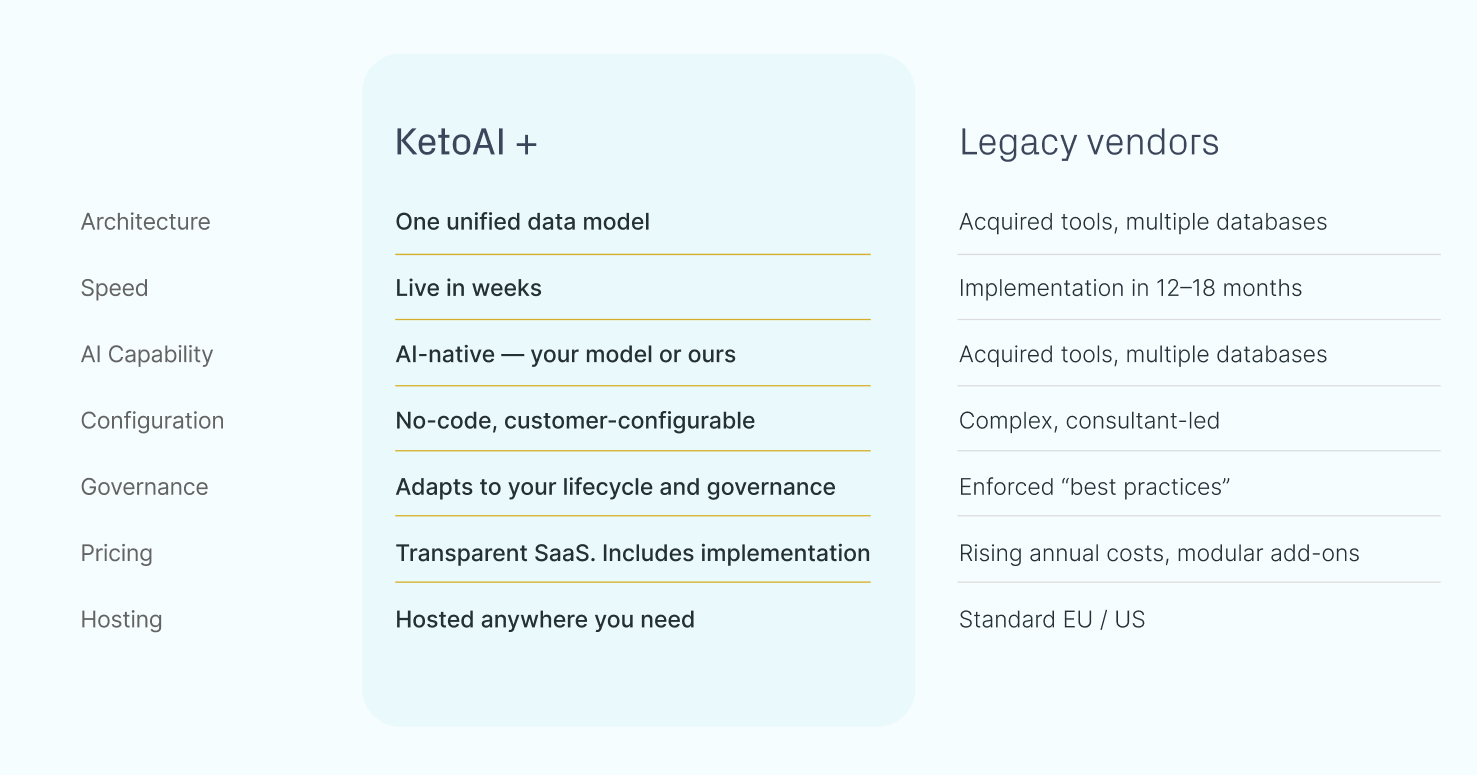
Fields, workflows, roles, and governance. All customisable in weeks, not months.
2. Pure SaaS delivery
Continuous improvements, no upgrade projects, no disruption.
3. Fast, low-risk migration
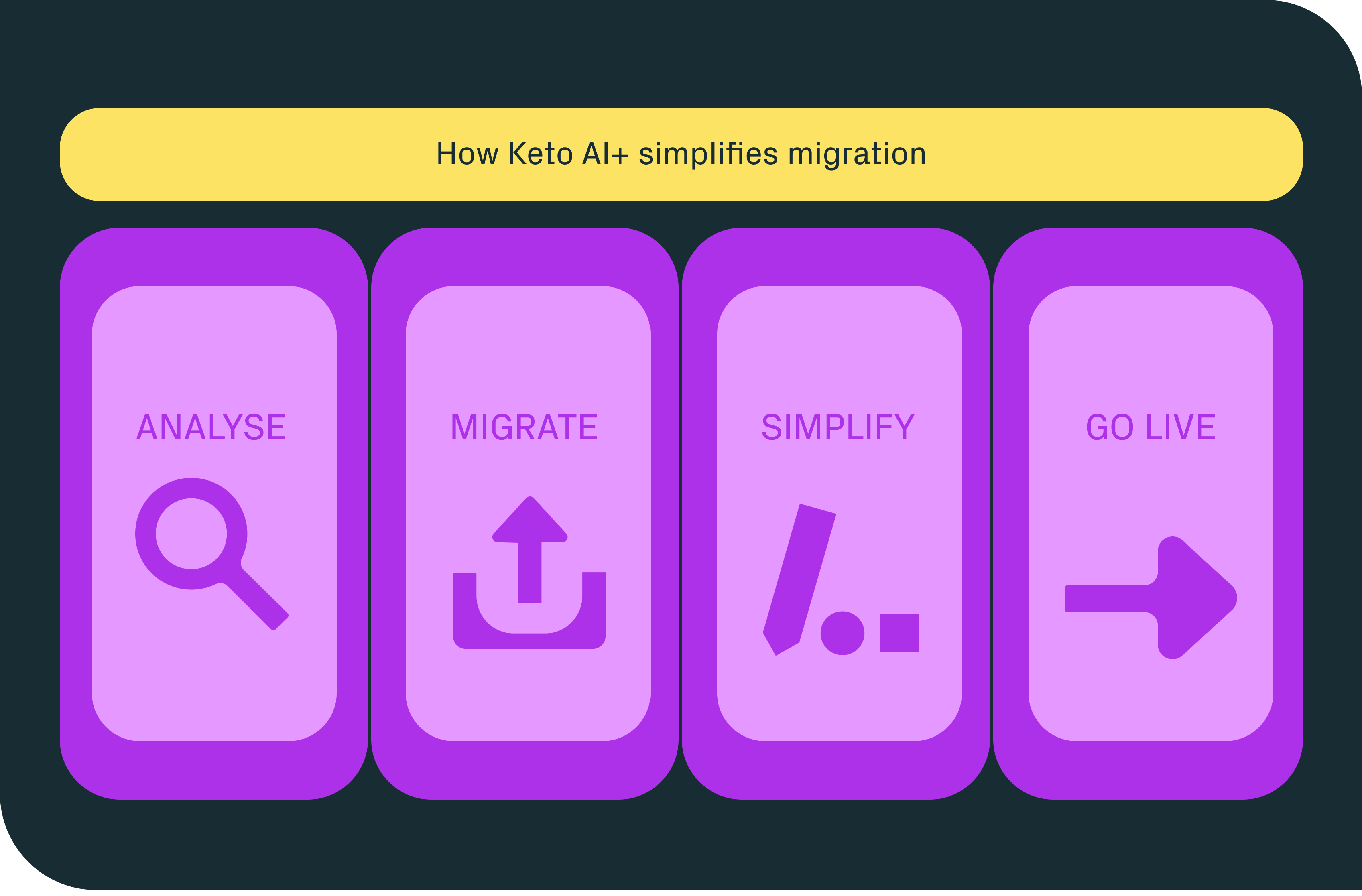
We analyse what you have (the good, the bad, and the “why does this workflow still exist?”), migrate what matters, and simplify the rest. No legacy baggage.
You bring the problems. we bring the calm.
4. Designed for real teams
Plain language, intuitive UI, and role-based clarity. People actually use it.
5. Unified data model
One structure connects strategy, portfolios, resources, finances, and risks.
6. Enterprise-ready integrations
SAP, Azure DevOps, Jira, Workday, Power BI, and more. All without brittle code.
7. Lower total cost of ownership
No “surprise” professional services. No multi-year rebuilds. Less vendor dependence, less complexity. More space to grow.
8. Proven migration success
We’ve helped organisations move from legacy PPMs, homegrown tools, spreadsheets, and “don’t-touch-it” platforms, delivering value in days, not quarters.
The outcome
You get a strategic portfolio platform that is:
- Always up to date
- Easy to use
- Ready for scale
- Cheaper to run
- Enterprise-grade (risk, finance, resourcing, strategy — all connected)
And most importantly:
You never get stuck in another legacy trap again.
Final thought
Migration isn’t a tech project. It’s a strategic pivot.
One that replaces friction with flexibility, and transforms a system that held you back into one that helps you move.
Ready to explore what that feels like? Let’s start with clarity.